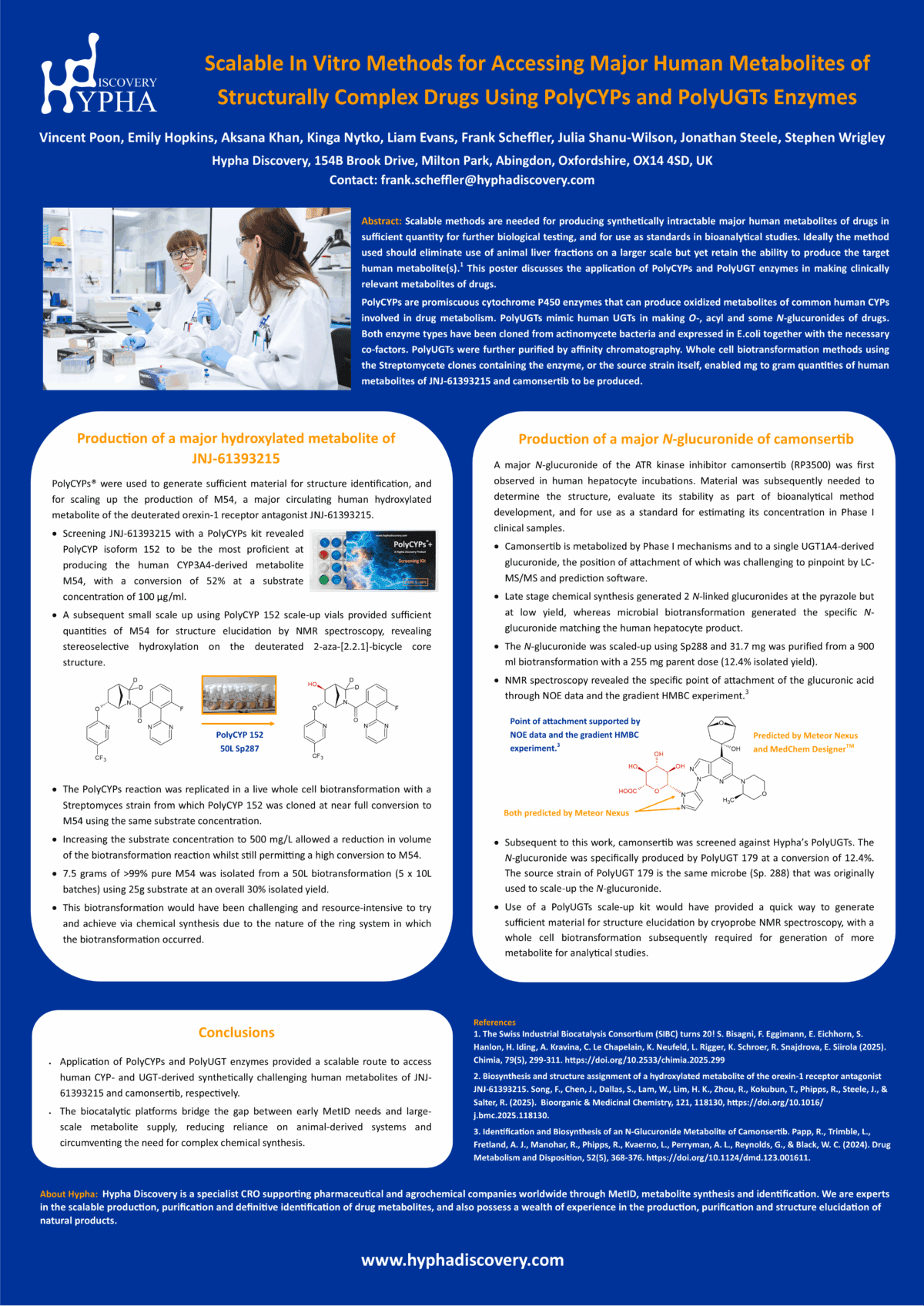
Scalable In Vitro Methods for Accessing Major Human Metabolites of Structurally Complex Drugs Using PolyCYPs and PolyUGTs Enzymes
Abstract
Scalable methods are needed for producing synthetically intractable major human metabolites of drugs in sufficient quantity for further biological testing, and for use as standards in bioanalytical studies. Ideally the method used should eliminate use of animal liver fractions on a larger scale but yet retain the ability to produce the target human metabolite(s).This poster discusses the application of PolyCYPs and PolyUGT enzymes in making clinically relevant metabolites of drugs.
PolyCYPs are promiscuous cytochrome P450 enzymes that can produce oxidized metabolites of common human CYPs involved in drug metabolism. PolyUGTs mimic human UGTs in making O-, acyl and some N-glucuronides of drugs. Both enzyme types have been cloned from actinomycete bacteria and expressed in E.coli together with the necessary co-factors. PolyUGTs were further purified by affinity chromatography. Whole cell biotransformation methods using the Streptomycete clones containing the enzyme, or the source strain itself, enabled mg to gram quantities of human metabolites of tebideutorexant (JNJ-61393215) and camonsertib to be produced.