
What We Do
MetID Service Packages
LC-MS/MS MetID Packages
We provide LC-MS/MS-based metabolite identification services to support drug discovery and development, from rapid early-stage metabolic soft-spot assessment through to detailed metabolite profiling and structural interpretation of in vitro and in vivo samples. Hypha’s MetID capability is integrated with our established metabolite synthesis, purification, and NMR structure elucidation platforms. This means we can support projects beyond LC-MS/MS detection alone, helping clients progress from metabolite profiling to definitive structure confirmation by NMR spectroscopy and access to purified metabolite material where required.
Our MetID packages are designed to help clients understand the major routes of metabolism, compare metabolite profiles across species, identify human-specific or disproportionate metabolites, and prioritise metabolites for further structural confirmation, synthesis, biological testing, or use as analytical standards. We offer a range of MetID packages to suit your application, from rapid discovery screening to in vivo metabolite profiling. We can also tailor the study to your project as needed.
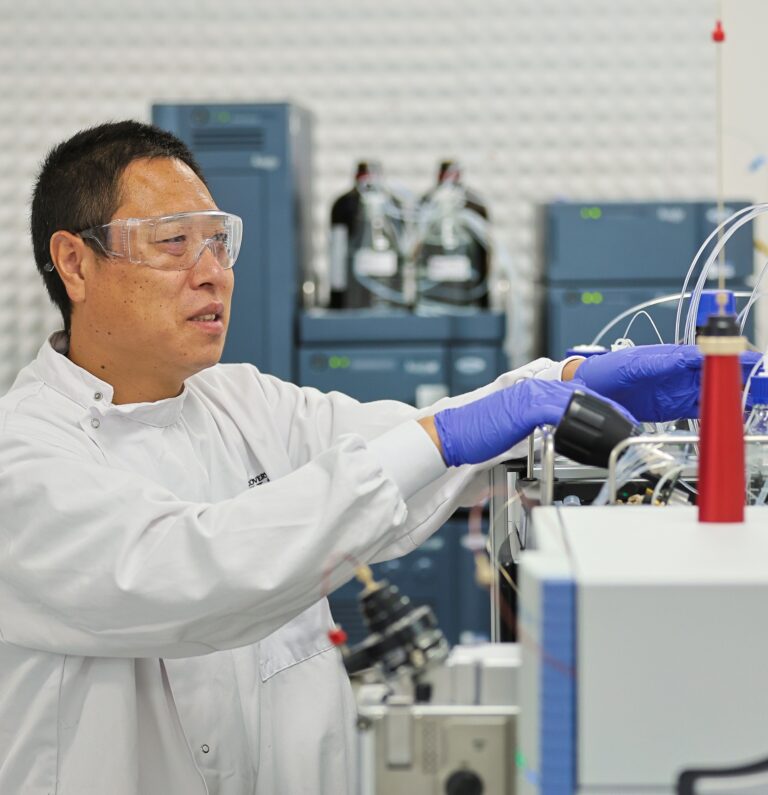
MetID Tiers
Hypha offers a tiered range of MetID services to match the level of information required at each stage of discovery and development. Whether you need a rapid early discovery screen, a more complete in vitro metabolite profile, MS/MS-supported structural interpretation, or profiling of in vivo samples, we can provide the most appropriate approach.
Package | Best suited for | Typical output |
Tier 1: Rapid Discovery MetID | Early discovery compounds where a fast overview of the major metabolites is required | Parent compound and approximately 3 most abundant metabolites, with concise tabular reporting |
Tier 2: Enhanced Discovery MetID | Mid-discovery studies requiring broader metabolite coverage and comparison across selected systems or species | Parent compound and main metabolites, typically top 10 or metabolites meeting an agreed reporting threshold |
Tier 3A: Comprehensive In Vitro MetID | Lead optimisation or candidate selection studies requiring a broader metabolite profile | Main metabolites plus relevant minor metabolites for information |
Tier 3B: Comprehensive In Vitro MetID with MS/MS Interpretation | Studies requiring additional structural support for key metabolites | Comprehensive metabolite profile with extracted ion chromatograms, representative spectra, and interpretation of key fragment ions |
Tier 4: In Vivo Sample MetID | Profiling of circulating or excreted metabolites from plasma, urine, or other biological samples | Bespoke in vivo metabolite profile using submitted samples, including AUC-pooled plasma where appropriate |
MetID Tiers
Tier 1 is designed for early-stage studies where a quick overview of the most abundant metabolites is required. This package is typically used to identify the main metabolic routes and provide an initial comparison of metabolite formation in selected in vitro systems.
A concise report is provided summarising the parent compound and approximately 3 most abundant metabolites detected by LC-MS/MS. The report includes retention time, detected m/z, mass error, key fragment ions where acquired, proposed molecular formula where assignable, metabolite assignment, tentative structural annotation, and estimated relative abundance based on MS response.
This package is intended as a rapid screening approach and does not include comprehensive metabolite profiling, detailed MS/MS fragment interpretation, chromatogram or spectra appendices, or full structural elucidation unless specifically agreed as an additional scope item.
Typical use case: early discovery screening, rapid soft-spot assessment, initial metabolite comparison.
Tier 2 provides a broader discovery-level metabolite identification package. It is suited to projects where clients require more extensive metabolite coverage than Tier 1 and a more detailed metabolite table.
The report summarises the parent compound and the main metabolites detected in the selected in vitro system or systems. Depending on the agreed scope, this may include the approximately ten most abundant metabolites or metabolites meeting an agreed reporting threshold, such as ≥1% of total drug-related MS response. The report also includes a study summary, tabulated metabolite information, relative abundance estimates, incubation and analytical method details. Minor metabolites below the agreed threshold are not routinely listed.
Typical use case: mid-discovery metabolite profiling, cross-species comparison of main metabolites, lead optimisation support.
Tier 3A is designed for more comprehensive in vitro metabolite profiling. It provides broader metabolite coverage than Tier 2 while retaining a tabular report format.
The report expands reporting to also include minor metabolites above ≥1% of the total drug-related MS response profile. Relevant minor metabolites below the reporting threshold may also be listed for information, including retention time, molecular ion information, mass error, likely elemental formula, and presence or absence across selected species or systems where available.
Tier 3A is useful where a more complete understanding of the metabolite profile is required, but where detailed MS/MS interpretation, spectra, and chromatogram appendices are not required as standard.
Typical use case: candidate selection, broader cross-species metabolite profiling, assessment of human-specific or non-human-specific metabolites.
Tier 3B provides the most detailed standard in vitro MetID package. It includes comprehensive metabolite profiling together with supporting LC-MS/MS data and interpretation for key metabolites.
In addition to the tabular metabolite profile, the report includes extracted ion chromatograms, representative full-scan spectra, product ion spectra, proposed fragment assignments, and written interpretation of key fragment ions. This provides stronger structural support for proposed metabolite assignments.
Tier 3B is appropriate where clients require an evidence-backed metabolite identification report and more detailed interpretation of the LC-MS/MS data.
Typical use case: late discovery or preclinical support, structural interpretation of key metabolites, preparation for follow-on synthesis or definitive structure confirmation.
Tier 4 supports metabolite profiling from submitted in vivo biological samples such as plasma, urine, or other matrices. This package is bespoke and is defined according to the study design, available matrices, sample volumes, timepoints, and reporting objectives.
Where suitable plasma samples and pharmacokinetic sampling information are available, Hypha can prepare AUC-pooled plasma samples to support assessment of circulating metabolites. Urine or other matrices may also be pooled or processed as agreed. Pre-dose, blank matrix, vehicle control, or comparator samples may be analysed where available to support interpretation.
The report includes study and sample summary, pooling details, tabulated metabolite information, relative abundance estimates, extracted ion chromatograms, representative full-scan and product ion spectra, interpretation of key fragments for selected metabolites, sample preparation details, and the analytical method.
Typical use case: circulating metabolite profiling, excreted metabolite profiling, support for metabolite safety assessment strategy, comparison of in vivo and in vitro metabolite profiles.
Which MetID package is right for your project?
Our scientists can help define a study based on your compound, development stage, available samples, and reporting needs. Contact us to discuss the most appropriate MetID package or a bespoke workflow combining LC-MS/MS profiling, metabolite synthesis, purification, and definitive structure confirmation.
Contact us to discuss your specific requirements.
Example Applications
Hypha’s MetID services supports:
- Identification of metabolic soft spots in early discovery compounds
- Comparison of metabolite profiles across human and preclinical species
- Detection of human-specific or disproportionate metabolites
- Profiling of slowly metabolised compounds using extended incubation systems
- LC-MS/MS-supported structural assignment of key metabolites
- In vivo profiling of plasma, urine, or other biological samples
- Prioritisation of metabolites for synthesis, purification, NMR confirmation, or downstream testing
- Generation of metabolite standards for bioanalysis or biological evaluation
Integrated metabolite synthesis and definitive structure confirmation
Working with Hypha means we can integrate your MetID data with metabolite production, purification, and structure elucidation. Where more definitive structural information is needed than that provided by LC-MS/MS, Hypha can support follow-on work to generate, purify, and elucidate the structure of key metabolites.
Our capabilities include scalable biotransformation and chemical routes to phase I, phase II and mixed pathway metabolites. Methods include recombinant enzymes, microbial biotransformation, mammalian systems, fecal incubations, or chemical synthesis.
Purified metabolite standards can be generated through these workflows, which can be complemented by the addition of cryoprobe NMR for definitive structure elucidation.
Resources
Explore our library of resources comprising brochures, case studies, posters and publications about the work we do.

Access our brochure on Hypha’s One-Stop Metabolite Services and Kits to discover routes for synthesising all the main types of mammalian phase I and II metabolites.
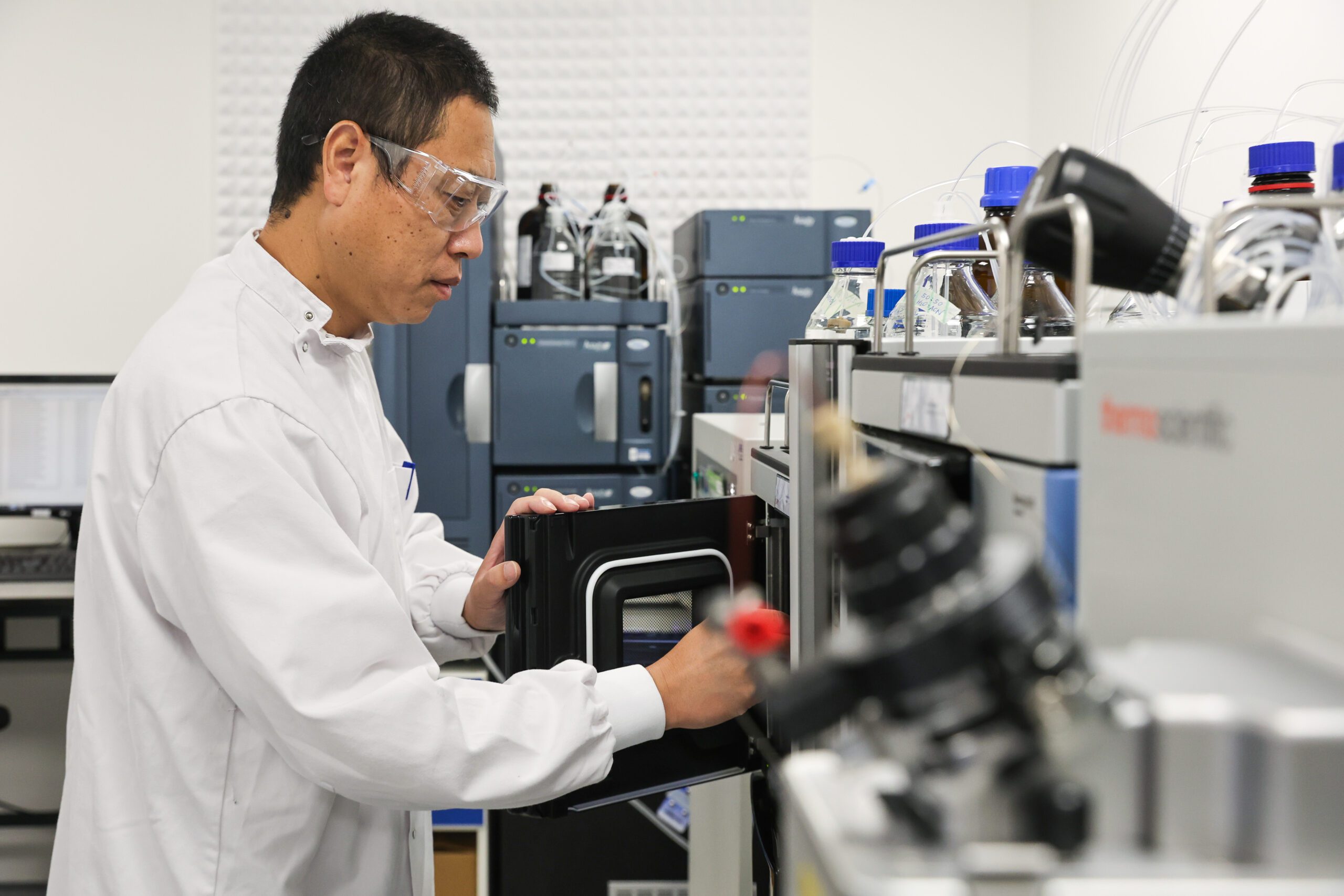
Download a brochure on Hypha’s MetID services spanning LC-MS/MS metabolite profiling to definitive structure elucidation by NMR spectroscopy.
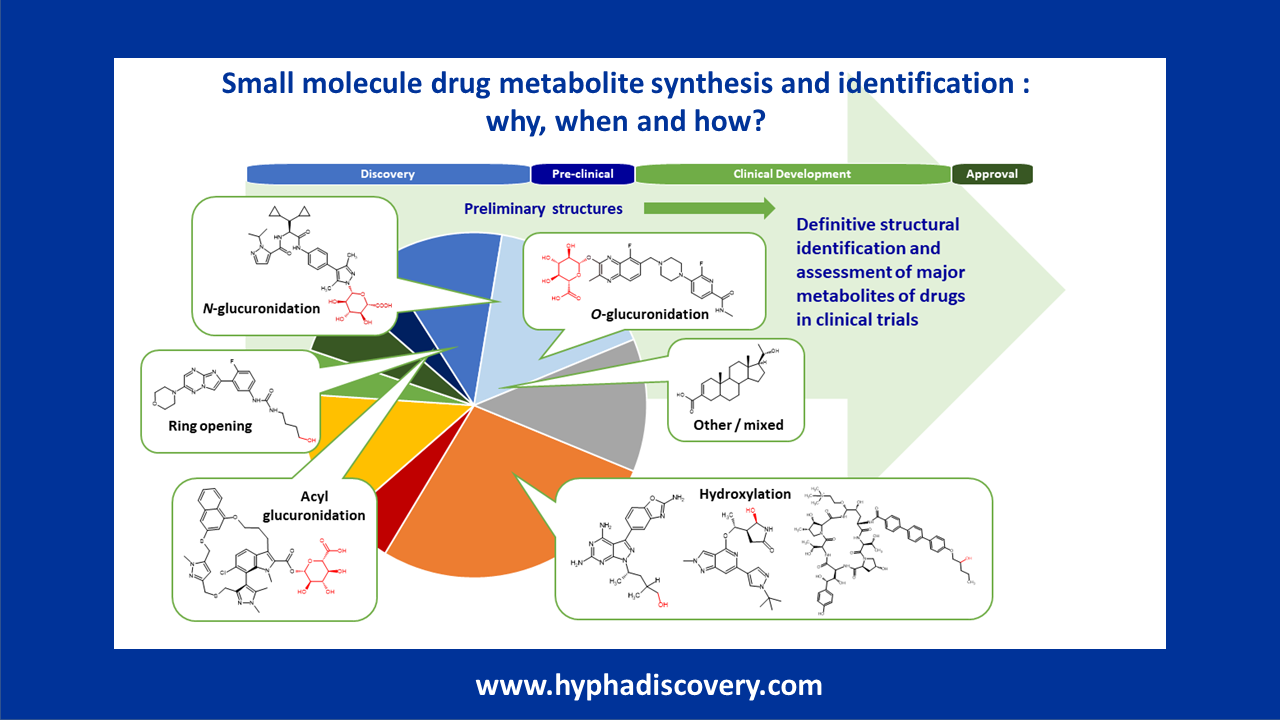
In this open access review in Drug Discovery Today we look at the why, when and how metabolites of small-molecule drugs are synthesised from the perspective of a specialist CRO.
Find out about our other services and products

Hypha's team did an excellent job by synthesizing the glucuronide for our project. They obtained the right structure which was not the one expected (as several options were possible). Sometimes, LC/MS-MS fragmentation do not deliver the right results. Hypha corrected the structure after NMR investigation. Now we have this important glucuronide for us with the right structure and have the good answer for the project. We really appreciated the hard work and the flexibility of the team to deliver the material.
Phillipe Guedat, CEO
Inflectis BioScience, France
Ready to begin? Our scientists are available to talk through your requirements
Hypha Discovery is a UK-based CRO supporting pharmaceutical and agrochemical companies worldwide through the production of metabolites and new derivatives of drugs and agrochemicals in discovery and development.
Resources
Cookie Policy | Privacy Policy | Supplier Code of Conduct Policy | Website Terms and Conditions
© Hypha Discovery 2021. All Rights Reserved.